Solar for farms & agribusiness
Put the sun to work on the farmstead and keep the cropland in production.
Grain dryers, livestock barns, irrigation and shops run on power you can price for 30 years. We size it to your bills, site it off the cropland, and line up Illinois Shines and tax incentives in the right order.
Where solar fits
Loads we design for every week
Grain handling & drying
Fall drying loads are big but short. We model the whole year so the array offsets the annual bill, not just September.
Hog, dairy & poultry barns
Ventilation, lighting and milking run every day of the year, the ideal match for a solar production curve. Curtis Creek Dairy won a national award with this setup.
Irrigation & pumps
Pivots and wells draw heavily in summer, exactly when a flatter summer tilt setting produces the most.
Shops, offices & homes on the farm
Most farm meters are mixed-use. We work through which meter and which rate structure gives the best return.
Siting
Off the cropland, on purpose
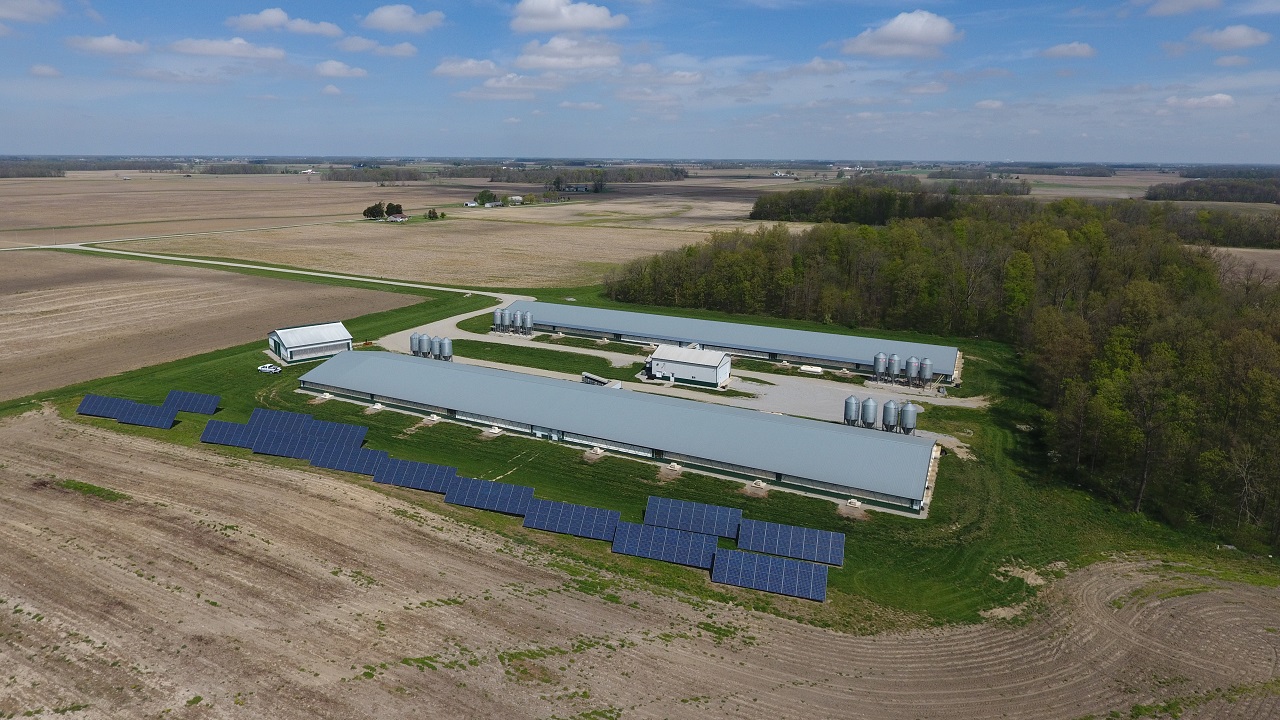
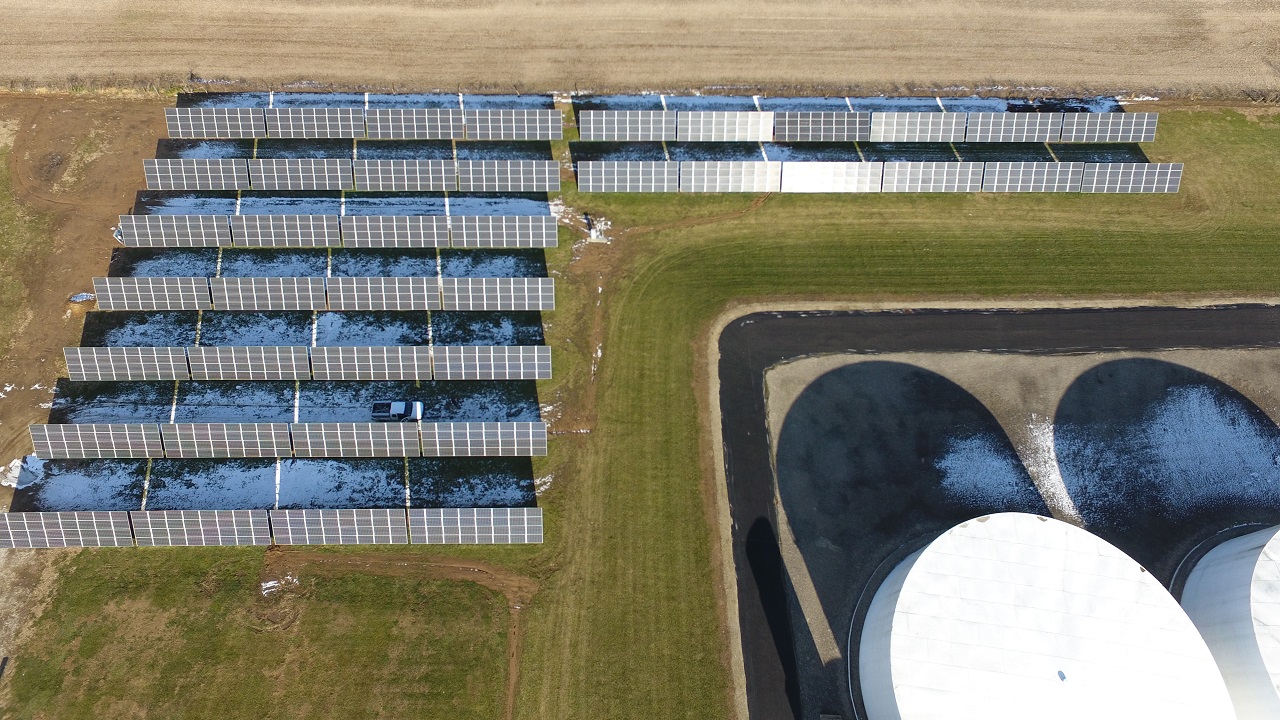
SolarCAM arrays go where they always have: the lot beside the barn, the lawn behind the house, a fence row or the pasture corner. Tillable acres stay in production and the array sits close to the loads it serves.
Our mapping tool uses satellite imagery with shade and sun-path modeling to find the right spot and the right row spacing before anyone drives a post.
Incentive stack for farms
Three programs, in the right order
| Program | What it’s worth | Who qualifies | Timing |
|---|---|---|---|
| Federal investment tax credit (48E) | 30% of system cost as a credit against income tax | Farm businesses; not residential use | System placed in service by Dec 31, 2027 |
| Depreciation (MACRS + bonus) | 5-year MACRS; 100% bonus depreciation restored in 2025 | Business-use portion of the system | First tax year in service |
| Illinois Shines (Illinois sites only) | 15 years of REC payments at a price the Program sets for your size and utility group; your Disclosure Form shows the exact amount | Illinois farms and homes in IOU, co-op or municipal territory | 50% at energization for ≤25 kW; 15% then 6 years for larger |
Incentive figures are estimates for illustration only and are not guarantees. Program rules, prices and availability change; eligibility is determined by the program administrator or USDA, not by Ag Technologies. Consult your tax advisor about credits and depreciation.
Farm FAQ
Questions we get at the kitchen table
Will it survive Midwest wind and snow?
The stand is engineered by Craig Welding, with wind-load certification by a professional engineer to the requirements of your jurisdiction and site. The steep winter tilt sheds snow without anyone climbing on anything.
Can livestock graze around it?
Yes, with a fence. Many customers fence the array like any other structure. The low edge sits high enough for mowing underneath.
What about my co-op or REMC?
Co-ops set their own export-credit rules and they vary widely. We read your tariff before sizing, and in Illinois the Disclosure Form must state exactly how your co-op credits exports.
How long does a project take?
Small systems: typically 8–16 weeks from signed contract to energized, depending on permits and utility interconnection. Illinois Shines Part I approval adds its own step; large systems take longer.
Who does the tilt changes?
You can, in about a minute per row, or we can on a service visit. Most customers do it themselves after the first season.
Bring a year of bills. Leave with a plan.
We’ll map your farmstead, size the system and show the 30-year cash flow with and without each incentive.